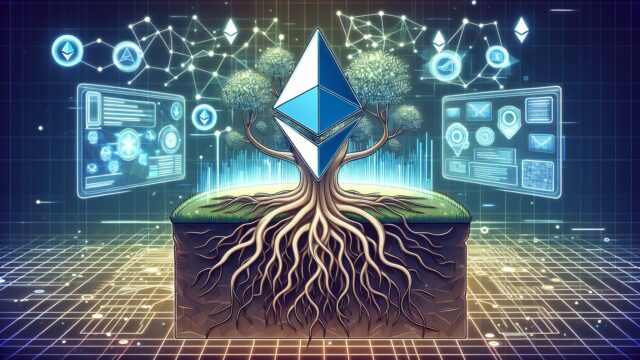
Web3 is a broad term that encompasses a range of decentralized technologies that aim to create a new generation of internet applications and services. At the heart of this movement is a group of innovative protocols that enable decentralized finance (DeFi), non-fungible tokens (NFTs), decentralized autonomous organizations (DAOs), and more. Among these protocols, Ethereum stands out as a foundational pillar. In this post, we’ll delve into the world of Ethereum, examining its features, capabilities, and impact on the future of the internet.
Introduction
Web3 represents a paradigm shift towards a more democratic digital ecosystem, with Ethereum leading the charge as one of the most influential protocols in this space. Ethereum is often described as a “world computer” because it provides a decentralized platform where developers can build and deploy smart contracts and decentralized applications (dApps). Let’s explore why Ethereum is considered the backbone of Web3 and how it is driving innovation in the digital world.
Body
What is Ethereum?
Ethereum is an open-source, blockchain-based platform created by Vitalik Buterin and a group of developers in 2015. It expands on the concepts first introduced by Bitcoin, but with a key distinction: while Bitcoin was designed primarily as a digital currency, Ethereum was conceived as a platform to facilitate immutable, programmatic contracts, and applications through its own currency, Ether (ETH).
Smart Contracts
Smart contracts are self-executing contracts with the terms of the agreement directly written into lines of code. They run on the Ethereum blockchain and automatically enforce and execute the terms of a contract when predefined conditions are met. This automation removes the need for intermediaries, reducing costs and increasing efficiency and transparency.
Ethereum Virtual Machine (EVM)
At the core of Ethereum’s capability to run smart contracts is the Ethereum Virtual Machine (EVM), which acts as a runtime environment for these contracts. It is isolated from the rest of the network, providing a layer of security as it executes the smart contracts. Every node in the Ethereum network runs an EVM instance, which allows for true decentralization of processing.
Decentralized Applications (dApps)
Using smart contracts, developers can build dApps on Ethereum. These apps are secure, transparent, and resilient to censorship. They span a wide range of use cases, including finance, gaming, social media, and supply chain management, to name just a few. Examples of notable Ethereum-based dApps include Uniswap, a decentralized exchange, and CryptoKitties, one of the first blockchain-based games.
Decentralized Finance (DeFi)
DeFi is a term for financial services that are built on top of blockchain platforms like Ethereum, without the need for traditional financial intermediaries. DeFi platforms enable activities such as borrowing, lending, and trading in a decentralized manner. Ethereum’s support for smart contracts is critical for DeFi, as it allows for the creation of complex financial instruments without a centralized authority.
Non-Fungible Tokens (NFTs)
Ethereum also provides the foundation for NFTs, unique digital tokens that can represent ownership of specific items. They enable the tokenization of art, collectibles, and even real estate, creating digital scarcity and enabling new kinds of digital ownership and transfer. Ethereum’s ERC-721 standard was the first to facilitate NFT creation, followed by ERC-1155, which allows for more efficient and complex types of tokenization.
Scalability and Upgrades
Ethereum’s growing popularity has highlighted some challenges, particularly concerning scalability. As the platform has matured, issues like network congestion and high transaction fees have become prominent. To address this, Ethereum is undergoing a series of upgrades, collectively referred to as Ethereum 2.0, which aim to improve scalability, security, and sustainability. These upgrades include a transition from the energy-intensive proof-of-work consensus mechanism to a more efficient proof-of-stake model.
Impact on the Industry
Ethereum’s influence extends beyond its own ecosystem. It has inspired the creation of alternative blockchain platforms and has set industry standards for smart contracts and dApp development. It also fosters a vibrant community of developers, entrepreneurs, and enthusiasts who are continuously pushing the boundaries of what is possible in Web3.
Conclusion
Ethereum has been a trailblazer in the Web3 movement, providing a rich architecture for building a decentralized future. Its ability to facilitate smart contracts and dApps has revolutionized various industries and will likely continue to do so. As Ethereum evolves with its community and technology, it will undoubtedly remain at the forefront of the Web3 revolution, shaping the future of the internet as we know it.
The continuous growth and development of Ethereum’s ecosystem make it a critical protocol to understand for anyone interested in the potential of Web3. Whether you’re a developer, investor, or just a curious observer, keeping an eye on Ethereum is essential for grasping the direction in which our digital world is heading.